Obstructive Sleep Apnea Treatment with Genio®
CPAP therapy is usually the first treatment option recommended to patients with obstructive sleep apnea (OSA). However, some patients are uncomfortable about using the rather cumbersome CPAP device or may be concerned about CPAP’s potential side effects or downsides. As a result, adherence to the therapy remains problematic, and the search for alternative therapies continues unabated.
Nyxoah has designed an alternative and more comfortable option for the treatment of obstructive sleep apnea: Genio®.
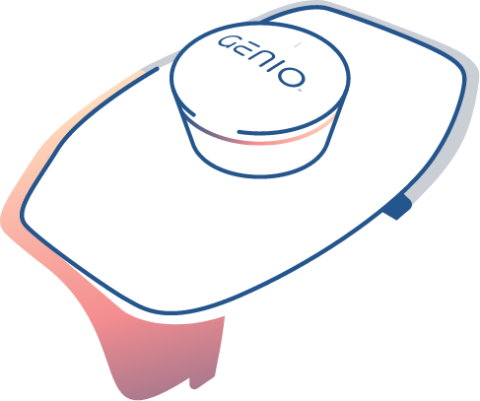
What Is Genio?
Genio® is a scientifically proven treatment for obstructive sleep apnea (OSA), a common sleep disorder characterized by recurrent episodes of decreased or absent inspiratory airflow during sleep.
Unlike positive airway pressure (PAP), Genio does not involve the wearing of a mask. Instead, it uses an alternative treatment called hypoglossal nerve stimulation to prevent upper airway obstruction while you sleep.
Genio is intended to treat patients suffering from moderate to severe obstructive sleep apnea.
Genio is:
- A scientifically proven treatment for obstructive sleep apnea
- A comfortable alternative to CPAP therapy that works without a mask.
What Is Hypoglossal Nerve Stimulation?
Genio uses hypoglossal nerve stimulation.
Hypoglossal nerve stimulation (HGNS) is an alternative treatment for obstructive sleep apnea that electrically stimulates the nerves of the tongue – the hypoglossal nerve that enables tongue movement – to prevent upper airway obstruction.
Hypoglossal nerve stimulation is a serious option for people looking for an alternative to CPAP therapy:
- Thousands of patients worldwide rely on hypoglossal nerve stimulation to treat their obstructive sleep apnea.
- The effectiveness of this treatment has been scientifically proven.
The Genio nerve stimulator is implanted under the chin to provide the bilateral stimulation of the hypoglossal nerve while you sleep.
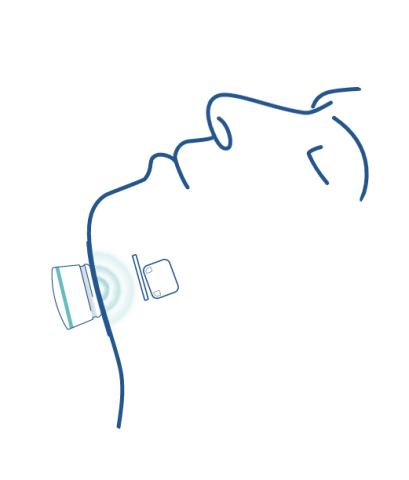
How does Genio work?
Bilateral HNS using the Genio system reduces OSA severity and improves quality of life without device-related complications.
The Genio System
The Genio system is made up of an implantable nerve stimulator, an activation chip, a charging unit and an adhesive patch.
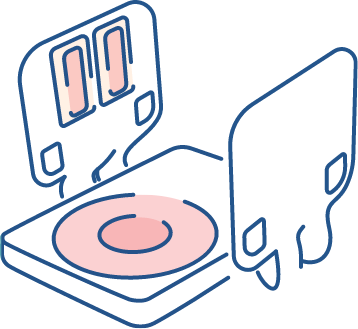
The Implantable Stimulator
The implantable stimulator is placed under the chin via a small incision.
Its electrodes are put in contact with both branches of the hypoglossal nerve resulting in bilateral stimulation of the nerve.
During your sleep, this stimulation triggers a small forward movement on the back of your tongue, thereby preventing your tongue from falling back and blocking your upper airway.
The Activation Chip, the Charging Unit and the Adhesive Patch
The activation chip controls the implantable stimulator.
Unlike other systems offering hypoglossal nerve stimulation, Genio uses an external activation chip.
This has 2 main benefits:
- No battery inside your body needs to be replaced. This means there is no need for additional surgery to operate the replacement.
- The external chip can be easily upgraded to the latest version. As a result, you benefit from the latest advances in stimulation and comfort.
The activation chip is charged using the charging unit.
Before going to bed, the activation chip is fixed using an adhesive patch that is then attached under your chin.
Together, the activation chip and the patch transmit energy to the implantable stimulator while you sleep.
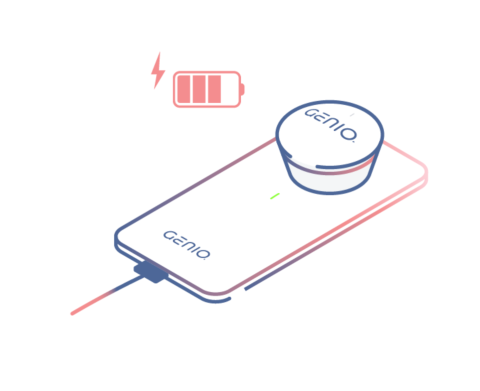
How to Use Genio?
Quietly (there is no sound of machinery), comfortably and without the need of a mask, Genio keeps your airway open during the night.
The Daily Routine
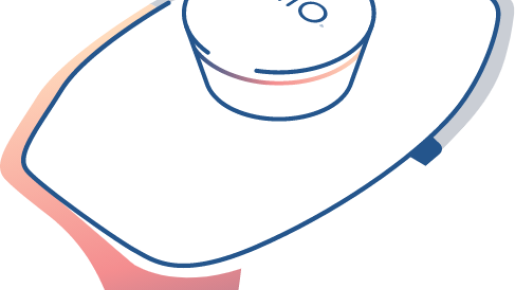
1. During the Day
You simply charge the activation chip using the charging unit:
- Plug the charging unit into a power socket.
- Place the activation chip on the charging area. The light on the charging unit turns on to let you know that the battery is charging. When the activation chip is fully charged, the light of the charging unit turns off.
It takes approximately 3 hours to charge an empty activation chip to full capacity.
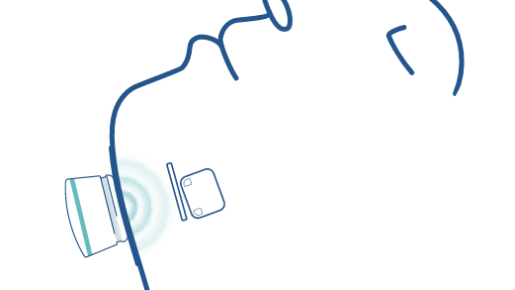
2. Before Going to Bed
- Connect the activation chip to a new disposable patch. The LED of the chip will turn blue for 5 seconds.
- After this, you can remove the foils from the adhesive patch and place it under your chin.
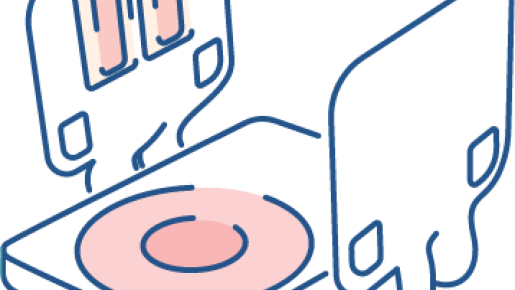
3. When you sleep
The nerve stimulator receives a signal when connected to the activation chip.
The stimulation starts when you fall asleep and this maintains your airway open throughout the night.
Your breathing frequency is used as a reference to adjust the stimulation cycle to ensure you enjoy a good sleep.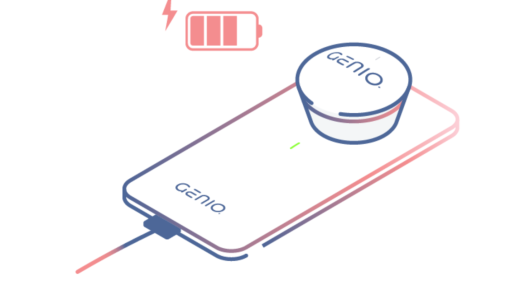
4. When you wake up
- Detach the adhesive patch from your chin
- Disconnect the activation chip from the patch and throw the patch in the trash.
- Recharge the activation chip.
Can the activation chip detach from the patch during my sleep?
The activation chip and patch are meant to function as one part.
The chip clicks firmly into place on the patch to prevent any possible disconnection during the night.
Do I need to keep shaving my chin from the moment I start using Genio?
It’s important that the patch sticks to your chin so that there is an optimal signal between the chip and the nerve stimulator. For this reason, it is better when the chin is free of any facial hair to ensure the adhesive part stays in place better.
Any questions? Contact our medical advisors to learn more about Genio.
Does it Work?
Hypoglossal nerve stimulation demonstrated clinically significant improvements in obstructive sleep apnea severity, daytime sleepiness, and sleep-related quality of life.
The BLAST OSA study has demonstrated the effectiveness of Genio.

Improvement in the Severity of Sleep Apnea
45.6% reduction in apnea hypopnea index (AHI)
48.7% decrease in oxygen desaturation index (ODI)
Positive Impact on Snoring
61% of patients showed a decrease in snoring intensity.
Comfortable and Easy to Use
91% of patients reported using the Genio system more than 5 days a week
Satisfied Patients
82% of patients reported being satisfied with the Genio treatment.
If you are an adult with moderate to severe sleep apnea, who has either failed or refused CPAP therapy, or does not tolerate it, you should consider Genio as an alternative treatment option.
Interested in Genio? Contact us to verify that you meet Genio’s patient eligibility requirements.
Implantation - Activation - Optimization
Implantation of the hypoglossal nerve stimulator
The implant is placed through a small incision under your chin.
The implantation procedure is short and minimally invasive. It usually takes about an hour and is performed under general anesthesia by a Genio-trained and certified surgeon.
First activation
The activation happens usually takes place 6 to 8 weeks after the implantation. It is usually done in a sleep lab. While the patient is asleep, the nerve stimulator is activated during a sleep study.
The settings of the activation chip are then personalized to each patient.
Optimization
After activation, additional follow-up visits and sleep studies may be scheduled to monitor and optimize the parameters of the Genio therapy.
Find a Doctor
We work with the best ENT and sleep apnea specialists to bring Genio to the greatest number of patients looking for an alternative treatment for obstructive sleep apnea.
Download the leaflet
You can also download the Genio leaflet and give it to your doctor.
Find Genio trained doctors in your area
If you are interested in Genio, consult a Genio-trained doctor.
Frequently Asked Questions
Which patients are right for Genio?
Genio is indicated to adults suffering from moderate to severe OSA (AHI from 15 to 65) who do not tolerate, or have failed or refused CPAP therapy.
Is Genio available in Europe?
Genio received CE mark in March 2019 and is approved for use in Europe.
Is Genio available in the US?
For now, Genio is limited by U.S. federal law to investigational use in the United States.
Is Genio therapy covered by health insurance?
Right now, the Genio treatment is fully reimbursed by health insurances in Germany and Switzerland. We are working hard to obtain reimbursement in other countries soon.
Please contact us for more detailed information.
Contact us
Don’t hesitate to contact our medical advisors. They are available to answer all your questions about Genio, and how to start this alternative treatment of obstructive sleep apnea.
References
- Eastwood PR, Barnes M, MacKay SG, et al. Bilateral hypoglossal nerve stimulation for treatment of adult obstructive sleep apnoea. Eur Respir J. 2020;55(1):1901320. Published 2020 Jan 9. doi:10.1183/13993003.01320-2019. https://www.ncbi.nlm.nih.gov/pmc/articles/PMC6949509/
- Heiser C, Sommer JU, Hofauer B, et al. Bilateral vs Unilateral Hypoglossal Nerve Stimulation in Patients With Obstructive Sleep Apnea. OTO Open. 2022;6(3):2473974X221109794. Published 2022 Jul 6. doi:10.1177/2473974X221109794. https://www.ncbi.nlm.nih.gov/pmc/articles/PMC9272182/
- Kent DT, Carden KA, Wang L, Lindsell CJ, Ishman SL. Evaluation of Hypoglossal Nerve Stimulation Treatment in Obstructive Sleep Apnea. JAMA Otolaryngol Head Neck Surg. 2019;145(11):1044-1052. doi:10.1001/jamaoto.2019.2723. https://www.ncbi.nlm.nih.gov/pmc/articles/PMC6764149/